The Roast That Tells the Truth: Why £20 Is Still the Sharpest Test of a British Restaurant
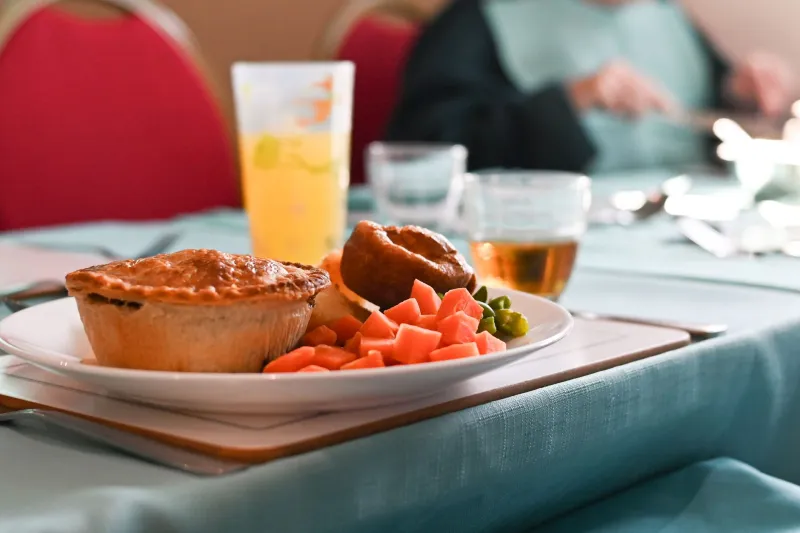
A Sunday roast is not a sophisticated dish. That is exactly why it works as a test. You can hide behind foam, tweezers and a story about foraged sea herbs for a while, but you cannot hide a bad roast potato. The meat is important, obviously, but the roast is really an audit of a restaurant's values: how it buys, how it cooks, how it serves and whether it understands that simple food still has to be done properly.
That is why the £20-per-head Sunday lunch is such a useful benchmark in 2026. Not because £20 is the magic number for every pub, every town or every cut of meat. It is not. But it is a fair price to hold a restaurant to. At £20, a roast should feel honest. It should not feel like a plate of ingredients that have been upcharged for the privilege of sitting near a log fire.
The £20 benchmark
In 2026, £20 per head for a Sunday roast is neither cheap nor outrageous. It sits in the middle: enough to cover proper ingredients and enough staff to look after a busy room, but not so much that the kitchen can coast on location alone. For that money, I want a plate that makes sense. Meat that tastes of something. Vegetables that have been cooked, not just warmed. Gravy that has had time to become gravy. And potatoes that have been given the attention they deserve.
This is where the roast becomes a fair audit. A restaurant that cares about its Sunday lunch tends to care about the rest of the week too. If the potatoes are pale, oily and sad, the chances are the kitchen is not tasting. If the gravy is a thin brown liquid with no body, someone has stopped paying attention. If the vegetables arrive grey and defeated, the sourcing story on the menu is probably doing more work than the kitchen.
Potatoes do not lie
The roast potato is the most democratic thing on the plate. It does not need a fancy breed or a celebrity farmer. It needs a decent spud, hot fat, salt and time. It needs a kitchen that has not rushed the parboil, that has roughed up the edges and that has given it enough space in the oven. When a roast potato is right — crisp outside, fluffy inside, properly seasoned — it tells you the kitchen is paying attention to the small things. When it is wrong, it tells you the same thing.
A Yorkshire pudding is the second test. Not because every roast needs one, but because a good one shows a kitchen understands heat and timing. A soggy one is a shrug. A burnt one is a distraction. A proper one is a small, crisp reminder that the roast is a craft, even when it looks simple.
Gravy is the handshake
Gravy is where a lot of restaurants give themselves away. Good gravy has depth. It tastes of the meat, or the vegetables, or the stock that has been simmering quietly in the background. It has a little body without turning into wallpaper paste. It is seasoned properly. Bad gravy is a brown liquid that tastes of salt and nothing else. It is the food equivalent of a firm handshake from someone who is already looking over your shoulder.
At £20, I do not expect a gravy made from three kinds of roasted bone and a reduction that took two days. I do expect it to taste like it belongs on the plate. That is not a luxury. It is the baseline.
Service is part of the plate
The roast is also a service test. Sunday lunch is a busy, slightly chaotic meal. Families, friends, people who have been for a walk and people who have not. A restaurant that handles that well is a restaurant that knows what it is doing. You do not need theatrical service. You need someone who knows what is on, who can answer a simple question about the meat, and who does not make you feel like an inconvenience for asking for more gravy.
That is the other reason the £20 test works. It is not just about food cost. It is about whether the whole operation is comfortable in its own skin. A place that can serve a good roast on a Sunday without fuss is usually a place that can look after you on a Tuesday.
What £20 should buy in 2026
By 2026, costs have not been kind. Energy, labour, butter, beef and rent have all had their say. A £20 roast is not a licence to cut corners. It is a budget that requires discipline. That might mean a cheaper cut cooked well. It might mean fewer garnishes and more gravy. It might mean a shorter menu and a kitchen that is not trying to do twelve things badly.
A restaurant can absolutely serve a brilliant roast for less than £20. It can also serve a mediocre one for £30. The number is not a guarantee. It is a question. What are you doing with this money? Are you buying better ingredients, or are you buying a bigger menu? Are you paying for a room, or are you paying for care?
The garnish trap
The fancy garnish is rarely the problem on its own. The problem is what it signals. A few micro herbs on a roast are harmless. A smear of something sweet and unexplained is not a crime. But when the garnish is doing more work than the gravy, something has gone wrong. The roast is not a plate for foam. It is a plate for appetite.
The best Sunday lunches I have eaten have not been the most complicated. They have been the ones where someone in the kitchen clearly understood that a properly cooked potato, a generous pour of gravy and a slice of meat that tastes of itself is already a complete idea. The garnish can come later, or not at all.
So if you want to know what a British restaurant really values, order the roast. Pay attention to the potatoes, the gravy and the way you are looked after. The £20 test is not about finding the cheapest lunch. It is about finding the places that still think simple food is worth doing properly. In 2026, that is worth more than any foam.