The Last Page Tells the Truth: What a Good Pudding Menu Says About a Kitchen
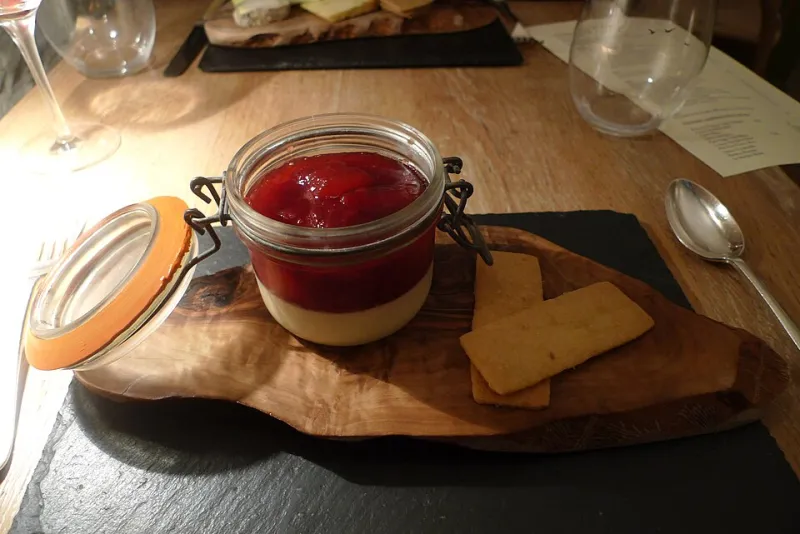
Photo: Ewan Munro from London, UK, CC BY-SA 2.0, via Wikimedia Commons
There is a moment near the end of a meal when the pudding menu arrives and the table goes quiet. Some people are already full. Some are pretending not to be. And someone, usually the person who suggested the restaurant in the first place, is quietly hoping the last page does not undo the good work of the first two.
It is easy to overlook the pudding list. Starters and mains get the photographs, the chef’s anecdotes and the careful sourcing notes. Puddings are often treated as the bit tacked on at the end, a commercial necessity rather than a statement of intent. But that is exactly why they are worth watching. A kitchen can hide a lot behind a well-reduced sauce or a generous plate of roast chicken. A bowl of custard and a slice of tart have nowhere to go.
A short list is not a lazy list
A confident kitchen does not need to offer eleven puddings. Four or five is plenty. Sometimes three is better still.
That is not because the kitchen cannot be bothered. It is usually because someone has decided what is worth doing well. A tight pudding menu suggests a real conversation has happened: what can we make properly, what suits the room, what can we prepare without turning the pass into a production line? A short list is a form of editing. It says the kitchen would rather do a few things with care than scatter a dozen things across the table and hope one lands.
You can often spot the difference before the food arrives. A list of four puddings, a cheese option and perhaps one thing made with the fruit that is actually in season feels considered. A list of fourteen, featuring a brownie sundae, a cheesecake, a chocolate fudge cake, a crumble, a sticky toffee pudding and three things involving biscuit crumb, can feel less like generosity and more like indecision. There is nothing wrong with any of those puddings in principle. The problem is when they read like a catalogue of things that can be warmed through on demand.
The freezer-catalogue problem
No one expects every UK restaurant to make every element from scratch at the back of a small kitchen. That is not realistic, and it is not the point. The point is whether the pudding tastes like it was made for the menu, or simply bought in to fill a gap in the margin.
The clues are rarely dramatic. A lemon tart with thin, crisp pastry and enough sharpness to make you sit up is doing something. A chocolate pot that tastes of chocolate rather than sugar and cream is doing something. A crumble with fruit that still has some bite, and a proper crumb that has been baked rather than scattered on at the last minute, is doing something. None of these are complicated puddings. They are just made with enough care to be worth ordering.
The freezer-catalogue approach is different. It is not about a single dish being bad. It is about a menu that reads as though every item has been chosen because it can be stored, sliced, reheated or spooned out with minimum fuss. That can still fill a table, but it rarely makes anyone remember the meal. In 2026, when so many restaurants are talking about provenance and craft on the savoury side, it is odd how often the pudding list is allowed to sound like it came from a different business entirely.
No need for a magic trick
There is also the novelty problem. A pudding does not need to arrive under a cloche, smoking, dusted with something unidentifiable or served on a piece of slate with a piped swirl of something that tastes mainly of vanity. Theatre has its place, but it is not a substitute for flavour.
A good pudding can be plain. A bowl of rice pudding with nutmeg is a proper pudding. Stewed rhubarb with custard is a proper pudding. A slice of Bakewell tart with a cup of tea is a proper pudding. Eton mess, done well, is a proper pudding. So is cheese and biscuits, which more restaurants should treat as a serious option rather than a consolation prize for people who do not like sweet things.
The question is not whether a pudding is fancy. The question is whether it tastes of what it says it tastes of. If a menu promises salted caramel, the salt should be there. If it promises lemon, the lemon should not be a suggestion. If it promises meringue, the meringue should not be squeaky. A pudding can be simple and still be exact. In fact, simple puddings are often the hardest to get right because there is less to hide behind.
What proper making looks like
In 2026, the restaurants getting puddings right tend to share a few habits. They keep the list short. They use fruit when it is good. They have one or two chocolate options and do them properly. They understand that custard is not a garnish. They offer cheese without making it feel like a punishment. They price puddings sensibly, usually somewhere around £6 to £9 depending on the room, and they do not act as though a bowl of stewed fruit is a luxury item.
You see it in small neighbourhood bistros where one person is clearly in charge of pastry. You see it in proper pubs that list three puddings on a chalkboard and mean all three. You see it in cafés that bake one cake well rather than offering eight cakes that taste of the same fridge. You see it in regional restaurants that make the most of local rhubarb, apples, berries or plums rather than reaching for imported fruit.
Those places tend to have a pudding menu that feels like part of the meal, not a sales opportunity at the end of it. The wording is usually plain. The descriptions are short. The ingredients are recognisable. There is no need for a paragraph about the chef’s childhood, unless the story is genuinely doing some work. A good pudding menu is confident enough to be quiet.
The last page is still part of the meal
None of this is about being sniffy. A warm brownie with vanilla ice cream can be a fine thing. A sticky toffee pudding can be excellent. The problem is not familiarity. The problem is when the pudding list feels like the least considered part of the restaurant, as though the kitchen has spent all its energy on the first two courses and handed the last one to whoever was passing.
So next time the menu arrives, read the last page first. Count the puddings. Look at the language. Ask yourself whether the kitchen sounds like it means it. Then order the one that sounds least like it needs a plot twist. If it arrives warm, generous and tasting of what it promised, you have learned something useful about the place. And if it does not, you have learned something too.
Dessert is not the whole meal. But it is often the clearest part of the bill.