No Booking, No Problem: The Case for Turning Up and Taking Your Chances
Photo: Staff photographer, Public domain, via Wikimedia Commons
I have nothing against a reservation. If I am taking my parents out for a birthday, I want a table at a known time and a chair with a back. But there is a particular pleasure in a restaurant that will not take my name, will not hold a table, and will not send me a reminder to confirm my existence forty-eight hours in advance. It just opens the door and sees who turns up.
In 2026, that feels almost radical. So much of eating out has become admin: deposits, time slots, cancellation policies, and the low-level anxiety of a booking system that treats dinner as a logistics problem. Walk-in-only places ask for something else. They ask you to be present, in person, and take your chances.
The joy of not planning
The best meals I have had in the last few years were not in my calendar. They happened because I was in a town, it was lunchtime, and there was a queue outside a small place with a short menu. I had no idea if it would be good. I had no idea if I would get in. That uncertainty did something useful. It made me pay attention.
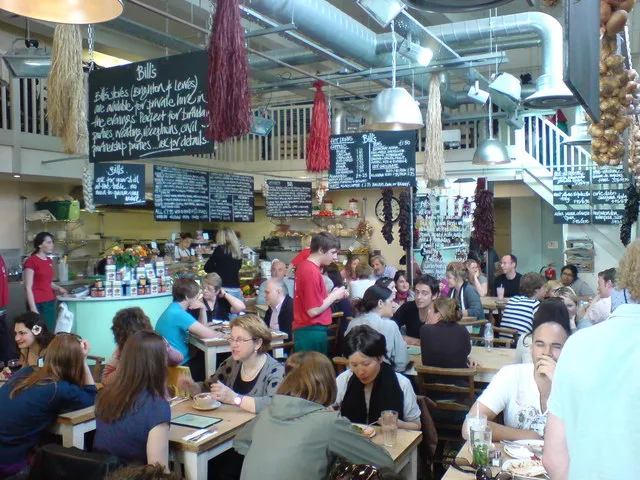
A booking can make a restaurant feel like a transaction completed before you arrive. A walk-in makes it feel like an event you are joining. You see the room fill up. You hear the kitchen shout. You watch plates go past and change your mind about what you want. You eat what is there, not what you decided about the place three weeks ago.
There is also the freedom to leave. If the queue is not moving, if the menu looks wrong, if the vibe is off, you can walk on. No cancellation fee. No awkward email. You have lost nothing but a few minutes and maybe a bit of pride about your ability to pick a restaurant.
What walk-in only gets right
A walk-in-only kitchen has to cook for the room in front of it. It cannot rely on a forecast of covers booked a month ago. That tends to produce a certain kind of discipline: shorter menus, faster cooking, less waste, and a team that is used to reading the day as it happens. It is not automatically better. But it is often more honest.
There is a social pleasure to it too. Queues are democratic. You stand next to people you would never otherwise meet. You hear someone recommend the special. You see a couple leave because they cannot wait, and you feel quietly pleased that you did. It is a small, old-fashioned kind of entertainment, and I mean that as a compliment.
The etiquette of the queue
If you are going to embrace walk-in dining, embrace the rules that come with it. Do not block the pavement. Do not send one person to hold a place for six. Check whether the whole party needs to be present, because many places insist on it and they are right to. Do not ask how long it will be every five minutes. Nobody knows. The answer is not a secret; it is a guess.
Have a backup. That is not pessimism; it is good manners to yourself. If the queue is forty minutes and you are hungry, decide whether you are staying before you start sighing loudly. Once you are in, order with a bit of speed. The table is yours for a meal, not for the afternoon. At the counter, do not use the empty stool next to you as a bag park. And tip properly, especially if the place has no booking system and therefore no guaranteed income from no-shows.
How to spot a walk-in worth your time
Look for the signs of a place that is set up for walk-ins rather than merely tolerating them. A short menu is a good start. A visible kitchen is better. Counter seating is a strong hint. So is a queue that moves, a chalkboard that changes, and a room full of people who look like they live nearby rather than like they have come for a content opportunity.
Be wary of the restaurant that advertises walk-ins welcome as an afterthought while every table is booked until June. That is not a walk-in restaurant. That is a booked restaurant with a marketing line. The real thing usually has a slightly awkward website, limited opening hours, and a phone number that nobody answers because there is nobody free to answer it.
Timing helps. Early lunch is your friend. Late lunch is even better. A wet Tuesday in February is not the same as a sunny Saturday in July. If you want the joy of spontaneity without the misery of a two-hour wait, go when other people are doing something else.
Where to start in the UK
London has the obvious examples. Barrafina has built a reputation on counter dining and no bookings, and Padella at Borough Market has made queuing for pasta feel like a normal part of the day. In Edinburgh, Oink turns out hog roast rolls to a steady stream of walk-ins. Around the coast, the best seafood shacks and harbour cafés often work on a first-come basis simply because that is how they have always done it.
Policies change, so check before you travel. That is not a legal disclaimer; it is common sense. The point is not the specific list. The point is that some of the best eating in the UK happens in rooms that refuse to treat a table as a calendar entry.
A small plea for the unplanned
Walk-in-only dining is not perfect. It can be hard for people with disabilities, difficult for groups, and impossible for anyone who needs certainty. I am not arguing that every restaurant should scrap bookings. I am arguing that we should value the ones that keep a little room for the unplanned. A restaurant that holds back a few tables for walk-ins is doing a small civic good. It is saying that dinner is not only for people who plan their lives in spreadsheets.
So next time you are hungry and passing somewhere with a chalkboard and a queue, do not open your booking app. Stand in line. Chat to the person next to you. Order the thing that is nearly gone. The meal might not be the one you would have chosen in advance, but it will be the one you actually had. In 2026, that is a rare and unfussy pleasure.