The Name on the Menu: How Specific Sourcing Earns Trust Without the Fanfare
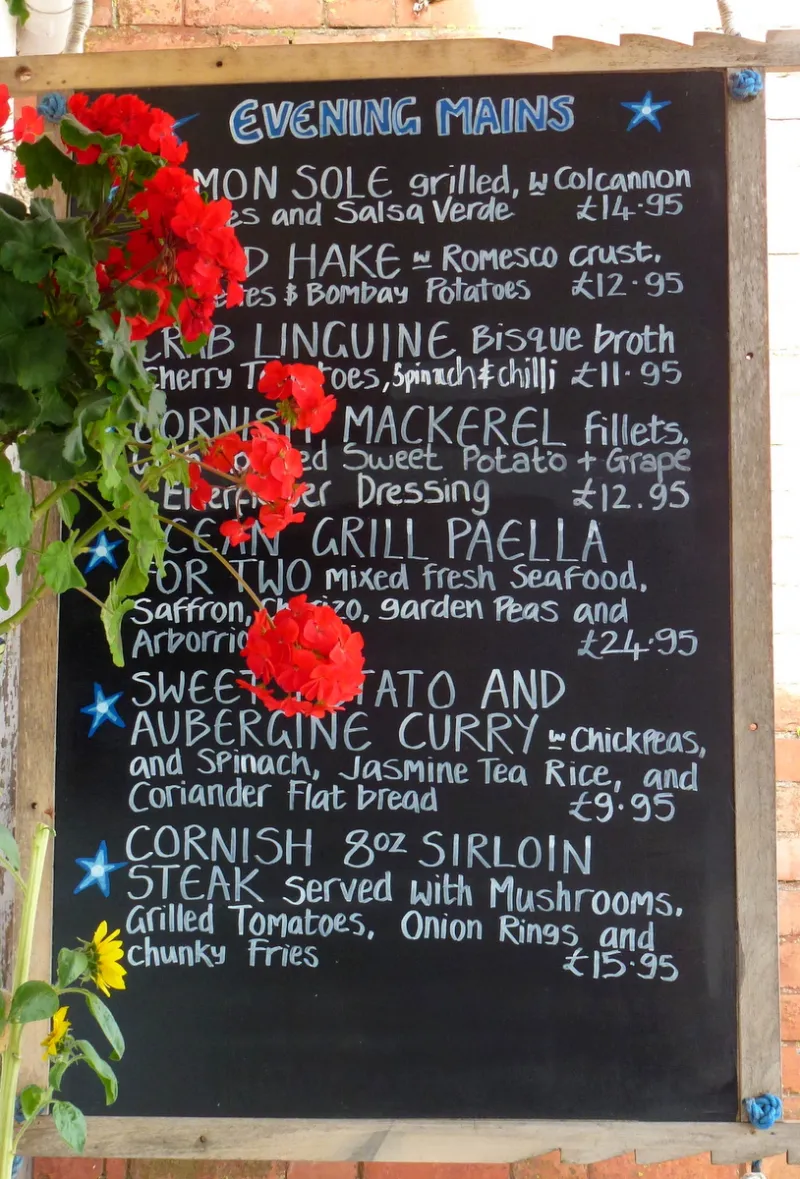
Photo: Jonathan Billinger , CC BY-SA 2.0, via Wikimedia Commons
A name is not a mood
A menu can say 'locally sourced' in a font that costs more than the carrots. It can talk about 'seasonal produce' and 'our trusted suppliers' without telling you a single thing you could repeat to a friend. Or it can say: 'Carrots from Ward's Farm, six miles away.' That is a different kind of sentence. It has a name in it.
In 2026, provenance is everywhere. Supermarkets have it, burger chains have it, and every third menu has a story about a family farm. That makes it harder, not easier, to know what is real. The good news is that the useful claims are usually the quiet ones. They are short, specific and a little boring. They do not need a paragraph.
What a named supplier tells you
A named farm, bakery or fisherman is not proof of quality. It is a traceable claim. That is still valuable. It tells you the kitchen knows where an ingredient comes from, that someone has made a choice, and that the menu is not just a list of dishes bought from the same wholesaler as everyone else.
It also tells you what a kitchen values. A restaurant that names its bread bakery is usually proud of its bread. A restaurant that names the boat is usually serious about fish. A restaurant that names the farm behind its pork is usually not trying to hide the pork.
There are limits. A name can be a marketing arrangement. A small farm can supply a large group. A menu can name one glamorous supplier and stay vague about everything else. Provenance is a clue, not a guarantee. But it is a better clue than 'artisan'.
Three levels of menu provenance
Most menus sit at one of three levels.
The first is mood. 'Local', 'seasonal', 'fresh', 'farm assured', 'our trusted butcher'. These words are not lies, but they are not information. They are the food equivalent of a smiley face.
The second is category. 'British beef', 'Cornish fish', 'Yorkshire lamb', 'sourdough'. Better, but still broad. Britain is a big place. A county is not a farm.
The third is specific. 'Hogget from Lleyn sheep at a farm near Machynlleth.' 'Day boat turbot from Brixham.' 'Bread from a bakery two streets away.' This is the level that earns trust. It gives you something to ask about. It gives the kitchen something to stand behind.
How to spot decorative padding
The warning signs are usually about volume. A menu that names 20 suppliers across 40 dishes is not necessarily honest; it is busy. A kitchen that changes its entire menu every week but keeps the same supplier names all year is not necessarily seasonal; it is copying and pasting. A menu that names the farm on the expensive steak but not on the cheap sausage is making a point about marketing, not sourcing.
Other tells: the names are only on the website, not the menu. The staff cannot answer a basic question about them. The same 'family farm' appears in three different restaurants with three different stories. The menu talks about 'rare breed' but not which breed. The fish is 'sustainable' but not from where or caught how.
None of this means the food is bad. It means the provenance is decoration. Decoration is fine on a wall. It is less useful on a menu.
What good looks like
The best examples are rarely grand. A neighbourhood bistro with one line per dish, a coastal chippy that names the boat, a Yorkshire café that names the dairy, a Welsh deli that names the smokehouse. You do not need a Michelin star to be specific. You need a kitchen that actually buys the thing it is proud of.
Some well-known UK restaurants have built reputations on this approach, but the principle is not exclusive. It works in a pub, a caff and a railway buffet if the kitchen is honest about what it has. The point is not to turn every meal into an audit. It is to reward the places that bother.
Questions worth asking
You do not need to interrogate anyone. One polite question is enough.
Which farm is this from? Is it in season? Who bakes the bread? Which boat landed the fish? Does the menu change when the supply does?
A good kitchen will light up. The answer will be specific, maybe even a little nerdy. A bluffing kitchen will change the subject or point at the word 'local' as if it were an address.
Use it as a tiebreaker
Provenance should not be a personality test. A restaurant can name every supplier and still serve a dull lunch. A restaurant can name none and cook beautifully. But when two places look similar, the one that names less and knows more is usually the better bet.
In 2026, the most honest menu is not the one with the longest story. It is the one with the shortest, clearest credit. A name, a place, a thing. That is enough.