No Ballad, Just Broth: The Quiet Test of a Restaurant's Soup of the Day
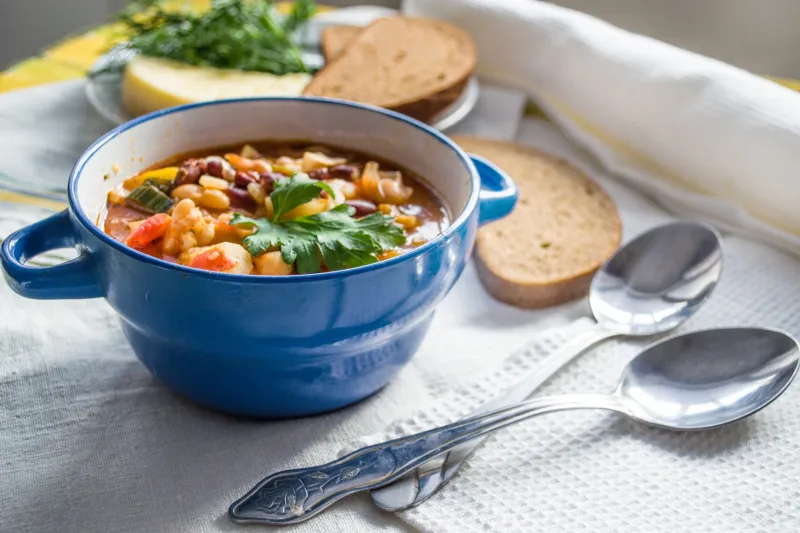
Few dishes arrive with less ceremony than a bowl of soup. That is exactly why it matters. In a UK restaurant in 2026, where menus can read like funding applications and every ingredient seems to have an agent, the soup of the day is a small act of restraint. It is also one of the most useful things a diner can order. A kitchen can hide behind a glossy burger or a complicated small plate. It cannot hide behind a bowl of leek and potato for £6.50.
The menu line should do less, not more
A good soup listing is short. It tells you what the soup is, what it costs, and whether bread comes with it. Anything else is decoration. That does not mean detail is always bad. If a kitchen writes 'roasted Crown Prince squash, sage and brown butter' in October, that can be useful. It tells you the kitchen is cooking with the season and not simply opening a catering tub.
The trouble starts when the description is doing more work than the bowl. A soup that needs three lines of prose, a named farm and a drizzle of something fashionable is often a soup trying to distract you. The soup of the day does not need a backstory. It needs to taste of today. If the listing changes with the market and the weather, that is a better signal than any mention of heirloom vegetables.
Freshness has a texture
You can usually tell a made-in-house soup before you taste it. It has a bit of give. It may be smooth, but it is not gluey. It may be chunky, but the vegetables have not collapsed into a uniform mush. It looks like something that was cooked in a pot rather than assembled from a powder.
Then comes the flavour. A good soup tastes of the main ingredient first, the stock second and the salt third. A reheated afterthought often tastes the other way round: salty at the front, flat in the middle, and oddly sweet at the end. The texture can be too even, as if it has been blitzed to within an inch of its life to hide the fact that there was nothing much to begin with.
Bread is part of the test. A bowl of soup with cold bread and a plastic butter packet is a bowl of soup that has been priced as an afterthought. A slice of proper bread, even simple bread, changes the whole transaction. It says someone thought about the plate as a whole.
Seasonality, waste and the stockpot
Soup is where a good kitchen quietly shows its discipline. It is a natural home for vegetable trim, chicken carcasses and the last of the week's mushrooms. A kitchen that makes stock has a use for things that would otherwise be thrown away. A kitchen that does not make stock probably does not make soup from scratch either.
That does not mean soup is a bin. There is a difference between using surplus well and serving up a liquid apology. A good soup of the day is made with intent. In autumn, that might mean squash, leek or celeriac. In winter, potato and cabbage or a dark mushroom broth. In spring, wild garlic and nettle. In summer, tomato and basil, but only if the tomatoes are worth it. A kitchen that serves the same soup in July as it does in January is not cooking with the season. It is just reheating.
What £6 should buy in 2026
Soup remains one of the last honest bargains on a UK menu, but the price band has shifted. In 2026, £5.50 to £7.50 is a fair range for a proper bowl with decent bread in most of the country. Above that, the soup needs to be a meal rather than a starter, or the bread needs to be genuinely exceptional. A £12 bowl in a hotel lobby is rarely about the soup.
Watch the extras. Bread should usually be included. A charge for butter is not the end of the world, but it should be clear before you order. Staff should know what is in the soup and whether it contains allergens. If nobody can tell you whether there is cream or gluten in the pot, that is not a charmingly relaxed kitchen. It is a kitchen that has not thought about the bowl.
How to ask the right question
You do not need to interrogate the server. Just ask what the soup is today. If the answer is 'vegetable', that is fine, but follow up with a simple question: what is in it? A kitchen that made the soup will know. A server who says they will check and comes back with leeks, potato and a bit of thyme is giving you a good sign. A server who shrugs and says it is just the soup is giving you a different one.
This is not about being difficult. It is about reading the signals. The soup of the day is not a test of the waiter's memory. It is a test of whether the kitchen is connected to what it is serving.
Where the simple bowl still earns its keep
The best soup in the UK is rarely in the places with the longest menu. Look for market cafés, community shops, bakery counters, station cafés and old-school dining rooms. In 2026, the £6 bowl still survives in places where rent is lower and the menu is shorter: a busy market café in Leeds, a community-owned store on the Welsh coast, a bakery in Fife, a tea room in the Peak District. Not every one will be brilliant. But the good ones share a refusal to dress up a bowl of soup as a lifestyle.
That is the quiet appeal. Soup is cheap to make but easy to ruin. It asks for stock, seasoning, time and a willingness to change the pot when the vegetables change. It does not need a ballad on the menu. It needs to taste of today. If a kitchen can do that for £6, it has told you more than any backstory could.