Three Eggs, Nothing to Hide: The Case for Ordering the Plain Omelette First
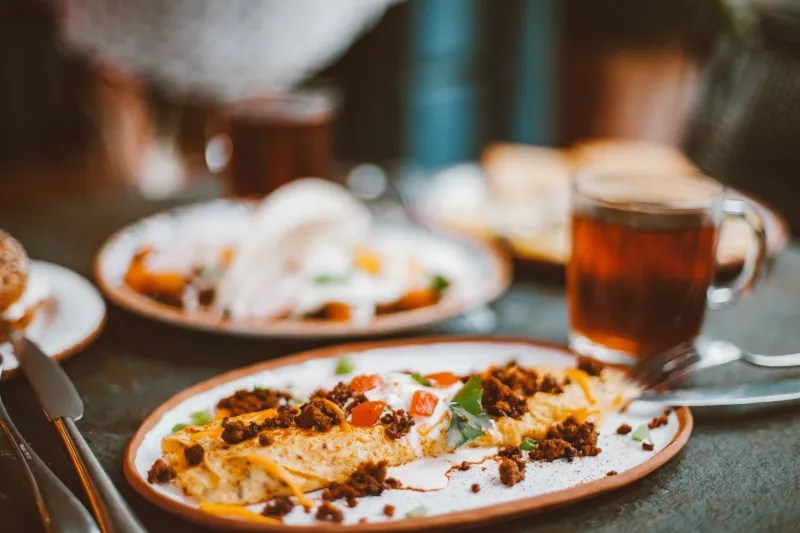
There is a particular kind of confidence in a kitchen that lists a plain omelette and leaves it at that. Not a folded parcel bulging with chorizo and three cheeses. Not something finished with truffle oil and a scatter of micro herbs. Just eggs, butter, salt and whatever the cook can do with about ninety seconds of heat. It is the shortest sentence on the menu and the one most likely to be fluffed.
Which is why, if you want to know what a place is really like before you commit to the £24 main, order the omelette.
The dish with nowhere to hide
Most restaurant dishes are collaborations. A sauce covers a slightly dry bit of chicken. A crunch of something fried distracts from a bland purée. A slow braise forgives timing, because the whole point is that it has been sitting in a low oven since Tuesday. None of that applies here. An omelette arrives naked and immediate, cooked to order in front of you by someone who had one go at it.
If the eggs are old, you taste it. If the pan is too hot, you get a rubbery sheet with brown freckles. If the butter is cheap and burnt, that is the whole flavour of your lunch. If the cook is nervous and stirs too long, you get scrambled egg that has been flattened and folded into a shape, which is not the same thing at all.
It is also, crucially, cheap to make and cheap to sell. That combination is a trap. A kitchen can put a £6.50 omelette on the menu as a sop to the non-meat-eater and never think about it again. The ones that do think about it are telling you something.
What chefs say when you order it
I have had this conversation in various forms over the past year with cooks up and down the country, and the answer is remarkably consistent. A chef in Bristol, running a thirty-cover dining room above a shop, put it plainly: 'When someone orders the omelette, I know they are paying attention. It is the only thing on my menu I cannot hide behind.'
A sous chef in Leeds described the anxiety differently. 'It is not hard to make a good omelette at home. It is hard to make one on a service where you have four other pans going and a ticket printer screaming at you. That is the test — not the technique, the composure.'
And a young cook in Cardiff, who has the omelette as a staff meal most days, admitted she judges other restaurants by it. 'I order it everywhere. If it comes out pale and floppy with no seasoning, I know the rest of the meal is going to be fine but not interesting.'
That last point is worth sitting with. A bad omelette rarely means a bad restaurant. It usually means an uninterested one, or an overstretched one. Both are useful things to learn early.
Four things that decide it
You do not need to be a chef to read the plate. Watch for these.
- Colour. A proper plain omelette is pale gold, maybe with the faintest blush where it met the pan. Uniform beige suggests it was cooked flat and slow with no butter to speak of. Deep brown means the heat was too high and the butter was past saving.
- Texture. The interior should be soft, almost custardy at the fold, with curds that have set gently rather than been beaten into submission. If it squeaks, someone was afraid of undercooking it.
- Seasoning. Under-seasoned eggs are one of the quiet disappointments of British eating out. Salt in the pan and salt at the end are not the same thing, and a kitchen that tastes as it goes will get this right.
- The plate around it. Brown bread and butter, a small dressed salad, maybe a few chips if the mood takes you. What you do not want is a mountain of garnish that says the kitchen did not trust the eggs.
How to order one without ruining it
Order it as a starter if the menu allows, or as a light lunch with a glass of something dry and a side of bread. Do not order it alongside three other things you are sharing, because by the time you get to it, it will be cold and you will have lost the moment. An omelette does not wait.
And do not ask for it 'well done'. If the kitchen knows what it is doing, they will either refuse politely or bring you something they are not proud of. Either way, you have missed the point of the exercise.
It is also worth saying that this is not a po-faced pursuit. The joy of the dish is that it is unpretentious by definition. It costs very little, arrives quickly, and asks nothing of you except a bit of attention. That is a rare thing on a UK high street in 2026, where a modest lunch can easily creep past £20 before you have ordered a drink.
Where to eat one in 2026
The plain omelette never headlines a menu, so these are the places where it quietly holds its own. Bouchon Racine in Clerkenwell has long been cited by chefs as the benchmark in London — thin, pale, folded with a restraint that borders on showing off. The French House in Soho turns one out at lunch with the same lack of ceremony it applies to everything else. Brasserie Zédel, off Piccadilly, is the grandest room in which to eat something so simple, and all the better for it.
Outside the capital, look at the small bistros attached to wine shops, the dining rooms above bakeries, the places with a chalked 'eggs, butter, toast' somewhere near the bottom of the board. The Parkers Arms in Lancashire has built a reputation on this kind of unfussy cooking, and any kitchen that bothers to list its egg supplier by name is worth a punt.
The real answer, though, is the one you walk past. Every town has a café or a bistro doing a decent omelette for under a tenner, and the only way to find it is to sit down and order one.
The verdict
Order the omelette. Order it early, before the mains have had a chance to flatter the kitchen, and see what comes back. If it is pale, soft, properly salted and served with bread that somebody cared about, you can relax and order the rest of your lunch with confidence. If it is not, you have spent six quid finding out what kind of evening you are in for — which is cheaper than the alternative.