Behind the Pass: The Plate That Never Makes the Menu
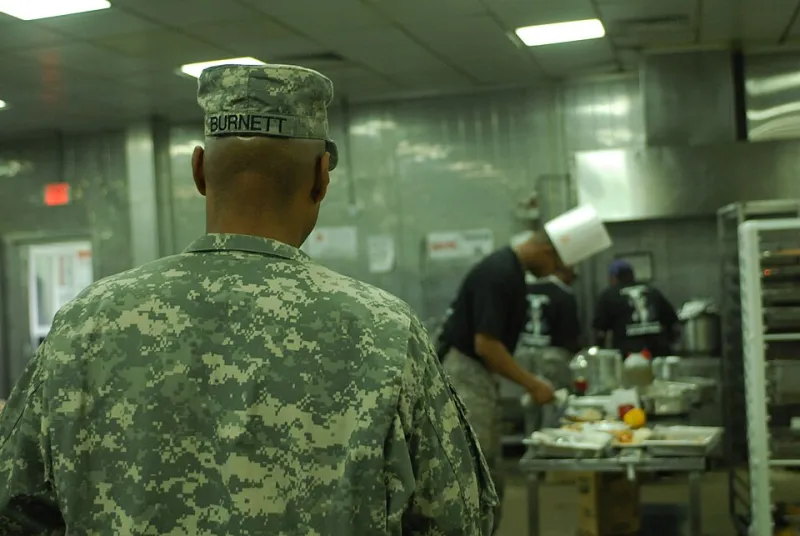
Photo: Staff Sgt. Lindsey Kibler, Public domain, via Wikimedia Commons
Before the doors open, before the first table is seated and the first wine is poured, there is a meal that never appears on the menu. It is cooked quickly, eaten standing up, and often made from the bits and pieces that will not make it to service. It is the staff meal, and it is the most honest thing a restaurant cooks all day.
Chefs talk about it with a mixture of affection and pragmatism. It is not customer-facing, so there is no reason to pretend. It is not a marketing opportunity, so there is no need to style it. It is just food, made for the people who make food. And that is exactly why it tells you so much.
The 4.45pm Plate
In many kitchens, staff meal lands in the late afternoon, somewhere between prep and service. The exact time depends on the restaurant, but the ritual is similar. Someone is put in charge — often the most junior chef, sometimes the most senior — and given a budget of leftovers, trim and whatever is in the walk-in.
The result is rarely glamorous. It might be a pasta bake, a curry, a tray of roasted vegetables with rice, a soup made from yesterday’s bread. It is eaten fast, often standing up, sometimes in a corridor or on a fire escape. Then the plates are cleared, the kitchen resets, and the real service begins.
Thrift Is a Skill
The staff meal is built on thrift, but thrift is not the same as stinginess. A good chef can take the trim from a fish, the ends of a loaf, the last of the tomatoes and turn them into something worth eating. That takes skill. It also takes respect for the ingredients.
'You learn more about a cook from the staff meal than from the menu,' one Bristol chef tells me. 'Anyone can order a nice piece of fish. Not everyone can make a good lunch out of what is left.'
That is the quiet challenge of the staff meal. It is a daily test of resourcefulness, and it happens in every kitchen in Britain, from a café counter in Cardiff to a Michelin-starred room in London.
The Trim Bin Is Not a Dumping Ground
There is a line between using leftovers and serving rubbish. The best kitchens know the difference. Trim is not waste; it is ingredients that need a different approach. The ends of a cheese, the bones from a roast, the vegetables that are past their best but still full of flavour — these are the raw materials of a good staff meal.
The worst staff meals are the ones where the trim bin becomes a dumping ground. A chef who does not care will boil it all together and call it soup. A chef who does care will season it, taste it, and make sure the people eating it feel like people, not an afterthought.
Generosity Has a Budget
Staff meal is also a lesson in generosity within limits. Most kitchens do not have a separate budget for it. It comes out of the same margins as everything else. That means the chef has to be generous without being wasteful, and creative without being fussy.
In some places, staff meal is a point of pride. The head chef cooks it themselves once a week. In others, it is a rotation, with everyone taking a turn. Either way, it is a shared meal, and sharing is part of the point.
What the Staff Meal Says About the Menu
If you want to understand a restaurant, look at how it feeds its staff. A kitchen that gives its team a proper lunch is a kitchen that understands hospitality from the inside out. A kitchen that gives them cold pizza and a bag of crisps is telling you something too.
That does not mean every great restaurant has a great staff meal. Kitchens are busy, budgets are tight, and sometimes lunch is a sandwich eaten over the sink. But the pattern matters. A place that looks after its people is usually a place that looks after its customers.
The Best Meal in the Building
Ask a chef about their favourite meal of the day and they will often mention staff meal. Not because it is the most refined, but because it is the most real. It is the food they eat when nobody is watching, and it is the food that keeps them going through a long service.
In 2026, as restaurants face rising costs and staffing pressures, the staff meal is a small but telling indicator of how a kitchen is run. It is not a silver bullet. It is just lunch. But lunch, made with care, is never just lunch.
What to Look For as a Guest
You will not see the staff meal on the menu, and that is fine. But you can look for its fingerprints. A kitchen that uses trim well will often have a good soup or a daily special. A kitchen that respects its ingredients will not overload a plate. A kitchen that feeds its team properly will usually have a calm, settled rhythm.
If you want to know whether a restaurant is worth a second visit, look at how it treats the people behind the pass. The plate that never makes the menu is often the one that tells the truth.