Eat Where They Sell It: The Quiet Brilliance of Britain’s Grocer-Cafés
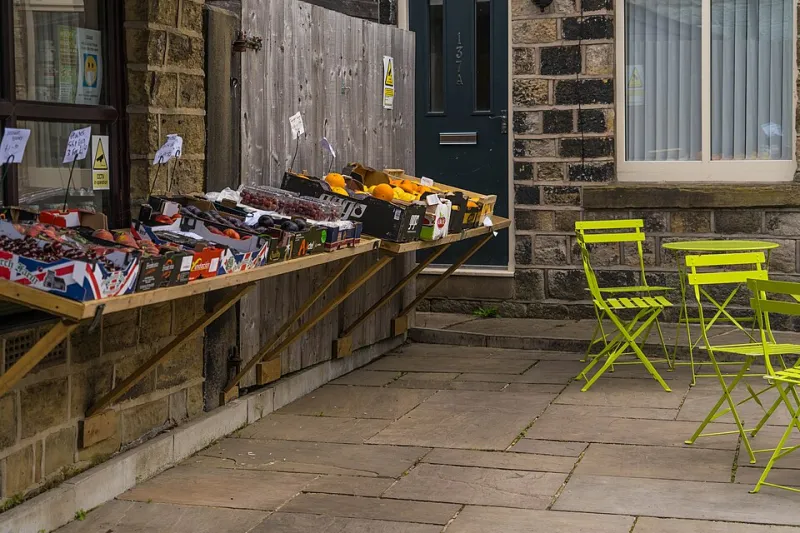
Photo: Claireneon, CC BY-SA 4.0, via Wikimedia Commons
Britain has a long and underrated tradition of eating where the ingredients are sold. Not in a restaurant that happens to have a deli counter, but in the deli counter itself. The greengrocer with a soup pot. The butcher with three stools and a hot plate. The bakery back room with a chalked lunch board and a queue that moves at the speed of the oven.
These places are not trying to be restaurants. That is exactly why they are worth your lunch money. The sourcing is not a story on the menu; it is the shelves behind you. The cooking is not a performance; it is what can be made from what is already there. In 2026, with lunch prices creeping up and menus getting longer, the shop with tables is one of the most honest ways to eat in the UK.
The Shelf Is the Menu
Walk into a good grocer-café and you can read the menu without sitting down. The vegetables in the crates are the vegetables in the soup. The cheese on the counter is the cheese in the toastie. The bread on the rack is the bread on the plate. There is no separation between the shop and the kitchen, and that is the point.
This is not a new idea. Markets have done it for centuries, and farm shops have been doing it for decades. But the last few years have seen a quiet spread of hybrid spots that take the idea seriously: a short menu, a few tables, and a clear line between what is sold and what is cooked.
What to Look For
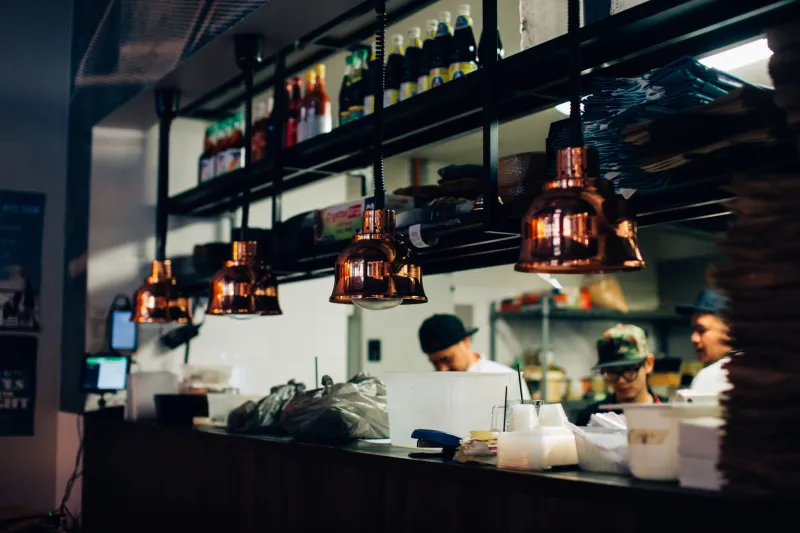
The best of these places share a few signals. A short menu, often written by hand. A lunch service that runs until the food runs out. A counter that is used for both selling and serving. Staff who can tell you where the tomatoes came from without consulting a clipboard. And a room that feels like a shop first and a café second.
You are not looking for linen napkins. You are looking for a chopping board, a pot of soup, and a place to sit. The pleasure is in the lack of ceremony.
The Greengrocer’s Soup Pot
The greengrocer’s soup pot is the purest version of the form. Whatever is good that day goes into the pot: the tomatoes that are too ripe to sell, the greens that need using, the last of the squash. The soup changes with the stock, which is another way of saying it changes with the season.
Look for a greengrocer with a single pot, a stack of bowls and a few stools by the window. In cities like Bristol, Leeds and Glasgow, these places often sit just off the main drag, away from the lunchtime chains. The menu might be soup, a toastie and a slice of cake. That is enough.
The Butcher’s Block With Stools
A butcher with a hot plate is a different kind of lunch. The meat is not an ingredient here; it is the reason you came. You might find a sausage roll made with the same pork as the chops, a beef sandwich from the trim, or a pie that uses the cuts that did not make the display.
The seating is often minimal — three stools, a shelf, a windowsill — and the service is brisk. You eat, you watch the counter, you leave. In places like Sheffield, Norwich and Cardiff, this is the lunch that locals keep quiet about.
The Bakery Back Room
Bakeries have been doing this for years, but the back-room lunch is having a moment. You buy a loaf at the front, then sit at a table in the back and eat a plate of eggs, a sandwich or a bowl of soup made with the bread that did not sell yesterday.
The best versions have a chalkboard that changes daily and a kitchen that is not afraid of butter. Look for a bakery with a few tables, a coffee machine and a lunch menu that fits on one hand. The smell alone is worth the trip.
The Farm Shop Hatch
Farm shops are the suburban and rural version of the same idea. The hatch or the café counter serves food made from the shop’s own produce, often with a view of the fields that grew it. The menu is usually simple: pies, soups, sandwiches, a roast on Sundays.
The risk is that farm shops can drift into gift-shop territory. The ones worth seeking out are the ones where the café feels like an afterthought, not the main event. If the menu is shorter than the shelves, you are in the right place.
A Short UK-Wide Field Guide for 2026
You do not need a specific list of names to find these places. You need a set of habits. Look for:
- A greengrocer with a soup pot and a few stools, especially in market towns and city neighbourhoods.
- A butcher with a hot plate and a lunch trade that runs until the meat runs out.
- A bakery with a back room, a chalkboard and a short lunch menu.
- A deli with a daily bake and a counter you can eat at.
- A farm shop where the café is smaller than the shop.
- A fishmonger with a lunch hatch, if you are near the coast.
- A market stall with a queue of locals at 12.30pm.
In 2026, these places are not hard to find if you know what you are looking for. They are usually busy, usually cheap, and usually closed by mid-afternoon. Go early, go hungry, and do not expect a booking.
The Rules of the Hybrid Lunch
The rules are simple. Order what the shop is selling. Do not ask for a substitute. Sit where you are told. Clear your plate. Pay at the counter. And if the soup runs out, order the toastie.
The hybrid lunch is not about choice. It is about trust. You are eating in a place that has already made a decision about what is good today. That is a rare and valuable thing.
Why It Works
The shop with tables works because it removes the distance between the source and the plate. There is no marketing layer, no mood board, no concept. There is a shop, a kitchen, and a few seats. The food is honest because the setup is honest.
That is not to say every grocer-café is good. Some are merely convenient. But the best ones remind you that lunch does not need a theme. It needs good ingredients, a bit of skill, and a place to sit. In 2026, that is still the best deal in Britain.